
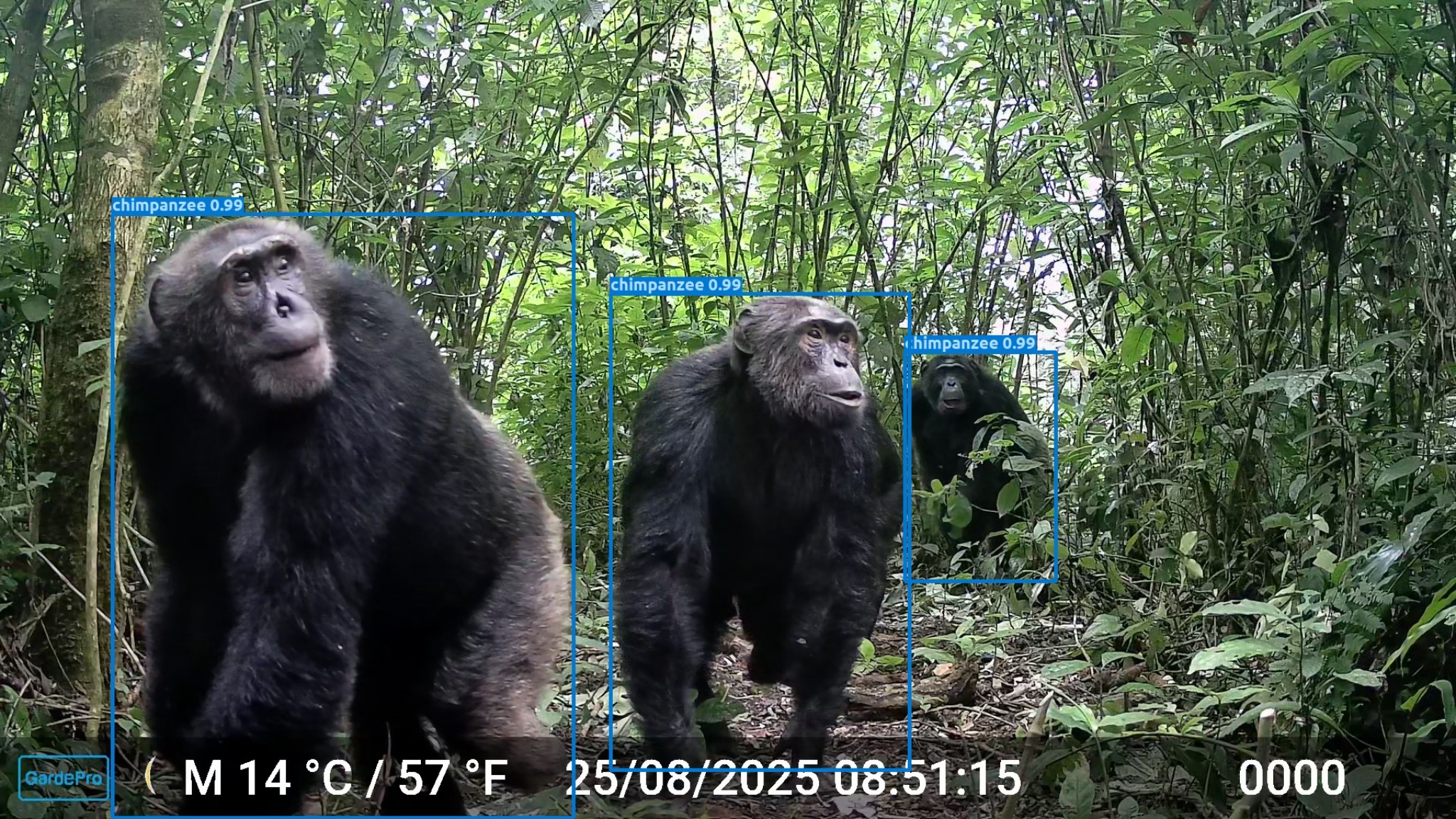
DeepForestVision
DeepForestVision is an AI tool developed from camera-trap data collected across six partner projects for the automatic identification of wildlife in African tropical forests. The idea: to produce an open-source tool that is reliable in the field and useful for research, ecological monitoring, and conservation action. Since its deployment in December 2025, it has been used in 11 African countries. Read the plain-language article in The Applied Ecologist.
An end-to-end project
1
- DeepForestVision: Automated wildlife identification for camera traps of African tropical forests — the reference paper presenting the model, its performance, and its uses for biodiversity monitoring.
- DeepForestVisionV2: Ecology-Driven Taxonomy Expansion for Camera-Trap Monitoring in African Tropical Forests — expanded taxonomy and improved robustness across field settings. Open-access version (arXiv).
- Bridging Local Ecological Knowledge and Remote Sensing for Wildlife Assessment and Conservation: Insights from Sebitoli, Kibale National Park, Uganda — combining evidence from camera traps, passive acoustic recordings, and local ecological knowledge.
2
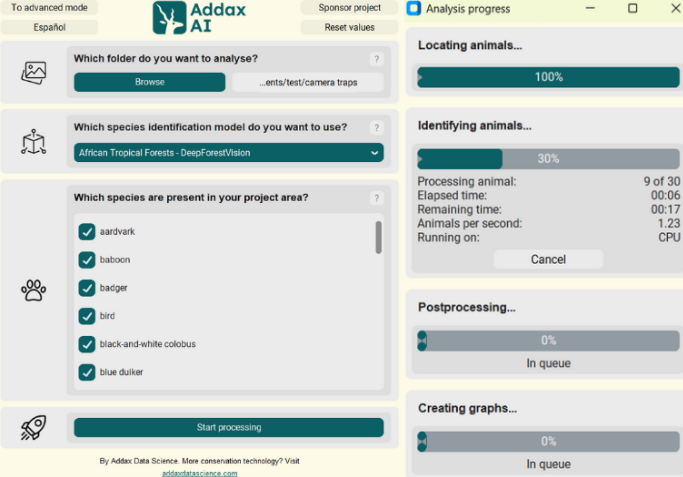
- Integration of the model into the AddaxAI interface, enabling simple local use by field teams and ecologists.
3
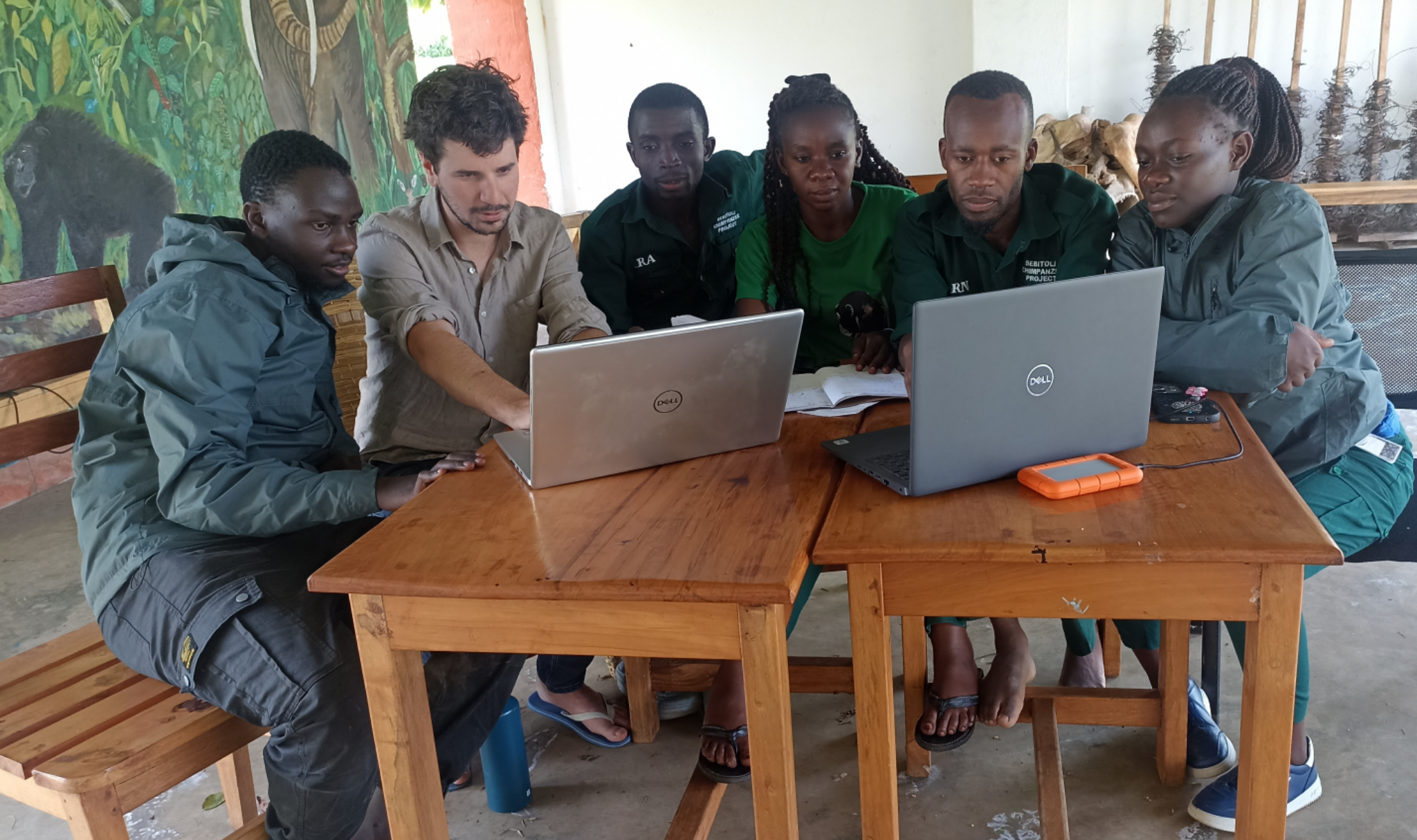
- Field capacity building, including training Innocent Kasekendi, local coordinator of the camera trap team of the Sebitoli Chimpanzee Project, in model deployment, use, and interpretation of outputs.
4
- Writing a user manual for the model and its integration into a camera-trap wildlife-monitoring workflow: Camera Trap Project Manual: Wildlife Monitoring in African Tropical Forests with DeepForestVision.
- Online workshops with Ugandan and Gabonese partners on deploying camera-trap projects with DeepForestVision.
- Training on the AI tools DeepForestVision and DeepForestSound — Libreville, 26 October 2026.
5
- Field example: African golden cat (Caracal aurata) identification by DeepForestVision.